




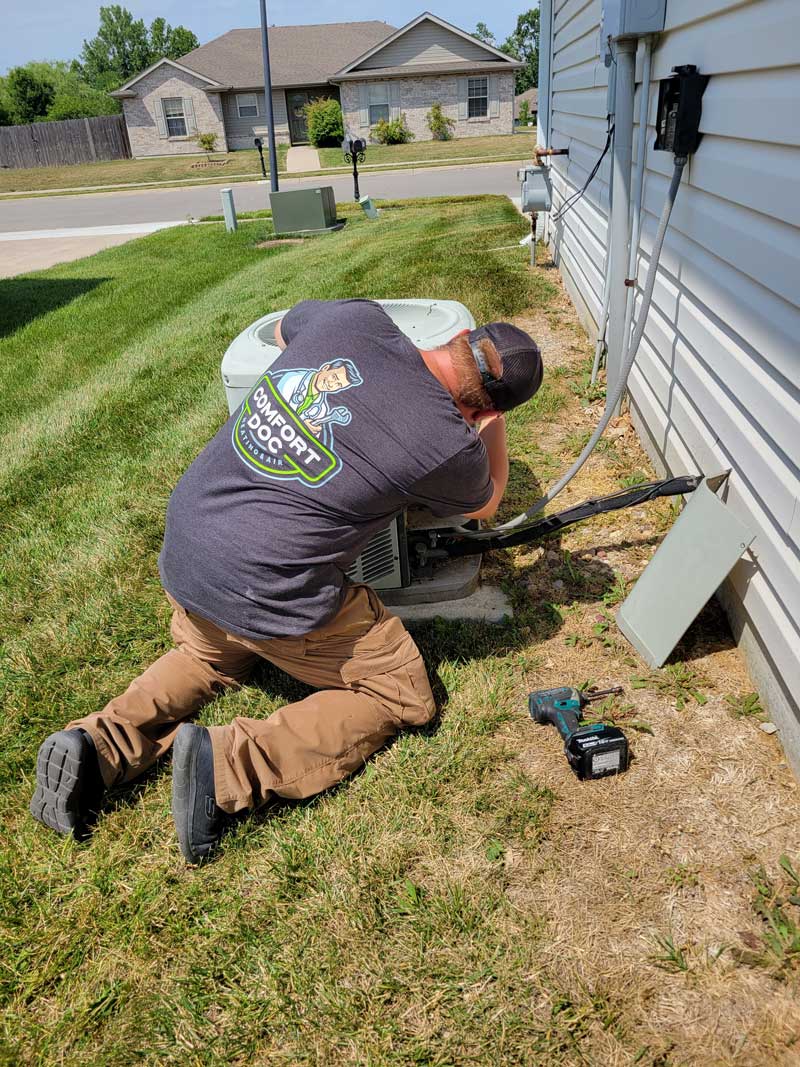
Stay Cool and Confident When Your AC Acts up
When your AC quits on a hot Mid-Missouri afternoon, the house heats up quickly, and stress can rise just as fast. It is hard to relax or sleep when the air feels heavy and warm, and it can be even more frustrating if you are not sure what is wrong or who to trust to fix it.
In this AC repair guide, we will walk through the basics of how your system works, the most common signs of trouble, simple checks you can safely do yourself, and what a professional visit should look like. The goal is to help you feel more confident, understand what technicians are talking about, and make clear decisions about repair or replacement.
At Comfort Doc Heating and Air, we provide residential heating, cooling, and indoor air quality services for Columbia and the surrounding Mid-Missouri area. We are insured, we focus on thorough diagnostics, and we believe in clear, respectful communication. We want you to understand what is going on with your system, not feel pressured or kept in the dark, so you can choose the option that makes the most sense for your home.
How Your AC System Works in Simple Terms
You do not need to be an HVAC expert to understand the basics of your AC system. A typical home setup has a few main parts that work together to move heat out of your home. Key components include:
- Thermostat, the control center that tells the system when to turn on or off
- Indoor unit or air handler, which includes the blower fan and evaporator coil
- Outdoor condenser unit, the big box outside with the fan and compressor
- Refrigerant lines, the copper pipes that carry refrigerant between indoor and outdoor units
- Ductwork, which distributes cooled air through your home and brings warmer air back
In simple terms, your AC does not blow in cold air from outside. It pulls warm air from your home, moves it over the cold evaporator coil, and the refrigerant in that coil absorbs heat. The refrigerant then carries that heat outside to the condenser, where it is released into the outdoor air. The cycle repeats until your thermostat says the temperature is where you want it.
For this process to work well, airflow must be strong and unobstructed, since a dirty filter or blocked duct can throw everything off. The refrigerant charge also must be correct, because too little or too much can cause poor cooling or damage. Finally, electrical and safety controls must be in good shape so the system can run reliably.
Understanding these basics makes AC repair conversations easier. When you know what the major parts do, it is simpler to describe your symptoms, ask good questions, and see why a technician is recommending a certain test or repair.
Common AC Problems Homeowners Notice First
Most AC issues start with small warning signs. If you catch them early, you may avoid a bigger repair later.
Common symptoms and possible causes include:
- Warm air from vents
- Thermostat set to “heat” or “fan only”
- Dirty air filter
- Low refrigerant or compressor problems
- Weak airflow
- Clogged filter or blocked return vent
- Failing blower motor
- Ductwork leaks or restrictions
- Strange noises
- Rattling from loose panels or debris
- Grinding or squealing from motors or belts
- Banging that may signal a failing part that needs quick attention
- Unusual smells
- Musty odors from a dirty or clogged condensate drain
- Burning smells from electrical issues that should be checked promptly
- Short cycling (system turns on and off frequently)
- Dirty coils or filter
- Oversized equipment
- Thermostat or safety control problems
- Higher energy bills without a comfort change
- Dirty components forcing longer run times
- Failing parts causing the system to work harder
- Refrigerant or airflow issues
Accurate AC repair starts with careful diagnostics, not guessing. We follow a consistent process and training standards so we look at the whole system, not just the most obvious part. That helps us find the real cause instead of just treating symptoms.
Safe DIY Checks Before You Call for AC Repair
Some issues are simple and can be checked safely before you call for professional help. The key is to stay away from anything electrical or related to refrigerant. Safe homeowner checks include:
- Confirm the thermostat is set to “cool” and the temperature is set below the room reading.
- Check your electrical panel for tripped breakers to the indoor or outdoor unit.
- Inspect and replace a dirty air filter. If you cannot see light through it, it is time for a new one.
- Make sure supply vents and return grilles are open and not blocked by furniture, rugs, or curtains.
- Look at the outdoor unit and clear leaves, grass clippings, or debris from the sides and top.
Just as important is knowing what not to do. Do not open electrical panels on your equipment, and do not try to handle, add, or “top off” refrigerant. Also, do not chip away ice on coils or pipes with tools, and do not bypass safety switches or covers.
Simple maintenance steps can solve minor problems, but anything involving wiring, refrigerant, or internal components should be left to a licensed, EPA-compliant technician. That protects both your system and your home.
What Professional AC Repair Should Look Like
A good AC repair visit is more than just swapping a part. It should feel organized, thorough, and clearly explained. A typical diagnostic visit from our team often includes:
- Visual inspection of indoor and outdoor units
- Testing thermostat operation and system controls
- Electrical checks on capacitors, contactors, and motors
- Refrigerant measurements to see if pressures and temperatures are in the right ranges
- Airflow and temperature checks across the coil and at vents
- Inspection of the condensate drain and pan to prevent water damage
We place a lot of value on training and consistent standards. We work to implement NATE-backed practices, maintain proper licensing, and use Heat Exchanger Experts Certified training for the heating side of our work, because that mindset of safety and detail carries over into cooling diagnostics too. When permits are required for mechanical work, we follow those rules so the job is done correctly and documented.
Just as important as the technical side is how everything is communicated. During and after the visit, we explain what we found in plain language, show readings, photos, or problem areas when it helps, and offer straightforward repair or replacement options, without pressure. That way, you are not just told what something will cost; you also understand why we recommend it.
Repair Now or Plan for Replacement
At some point, every AC system reaches a crossroads where you have to decide whether to repair it again or plan for replacement. That decision should never feel rushed or mysterious.
Key factors we look at with homeowners include:
- Age of the system
- How often it has needed repair in recent years
- Cost of the current repair relative to overall system value
- Comfort issues such as uneven temperatures or excessive noise
- Energy efficiency compared to newer equipment
A few simple rules of thumb many homeowners find helpful:
- If the system is newer and the repair is minor, repair usually makes sense.
- If repairs are starting to add up and the system is older, it may be time to compare long-term costs.
- Comfort and noise matter too, not just whether the unit can still run.
When replacement is on the table, we talk through how a cleaner install, proper permitting, and attention to ductwork and airflow can help a new system run better than the old one ever did. The goal is a setup that is sized correctly, moves air properly, and is installed in a way that supports a long, reliable life.
Preventing Future Breakdowns with Regular Care
The best AC repair is often the one you avoid. Regular maintenance gives your system a chance to run the way it was designed and helps catch small issues before they become big ones.
A typical AC maintenance visit may include:
- Cleaning or checking coils and other components
- Tightening electrical connections and checking key electrical parts
- Verifying refrigerant charge is within proper range
- Testing safety devices and controls
- Inspecting and clearing the condensate drain
Consistent maintenance plans or programs help:
- Reduce surprise repair calls
- Improve indoor air quality by keeping components cleaner
- Maintain better comfort and efficiency
- Extend equipment life so you get the most from your investment
We pay close attention to cleanliness during maintenance and repairs, both inside the equipment and inside your home. Protecting floors, cleaning up after ourselves, and leaving the work area tidy are all part of showing respect for your space and your family.
Next Steps to Protect Your Comfort in Columbia
Understanding AC repair does not mean you have to fix things yourself. It simply gives you the tools to recognize warning signs, handle simple checks safely, and know what to expect from a professional visit. Warm air, odd noises, or rising energy bills are all signals your system is asking for attention, and catching them early can save time and stress.
When you partner with a trained, licensed HVAC team that focuses on diagnostics, clear explanations, and clean workmanship, AC repair and replacement decisions become much easier. Our goal at Comfort Doc Heating and Air is to keep homeowners in Columbia and across Mid-Missouri informed and comfortable, with straightforward options and the information you need to choose what is right for your home.
Article by Matthew Elliott, sharing local insight into home comfort and AC repair best practices.
Restore Cool Comfort In Your Home Today
If your AC is struggling, we are ready to diagnose the problem quickly and provide reliable AC repair that keeps your home comfortable. At Comfort Doc Heating and Air, our technicians focus on honest recommendations, clear communication, and quality workmanship on every job. Schedule a convenient appointment or request an estimate when you contact us today.